5.56 vs .308: Which Rifle Cartridge Do You Need?
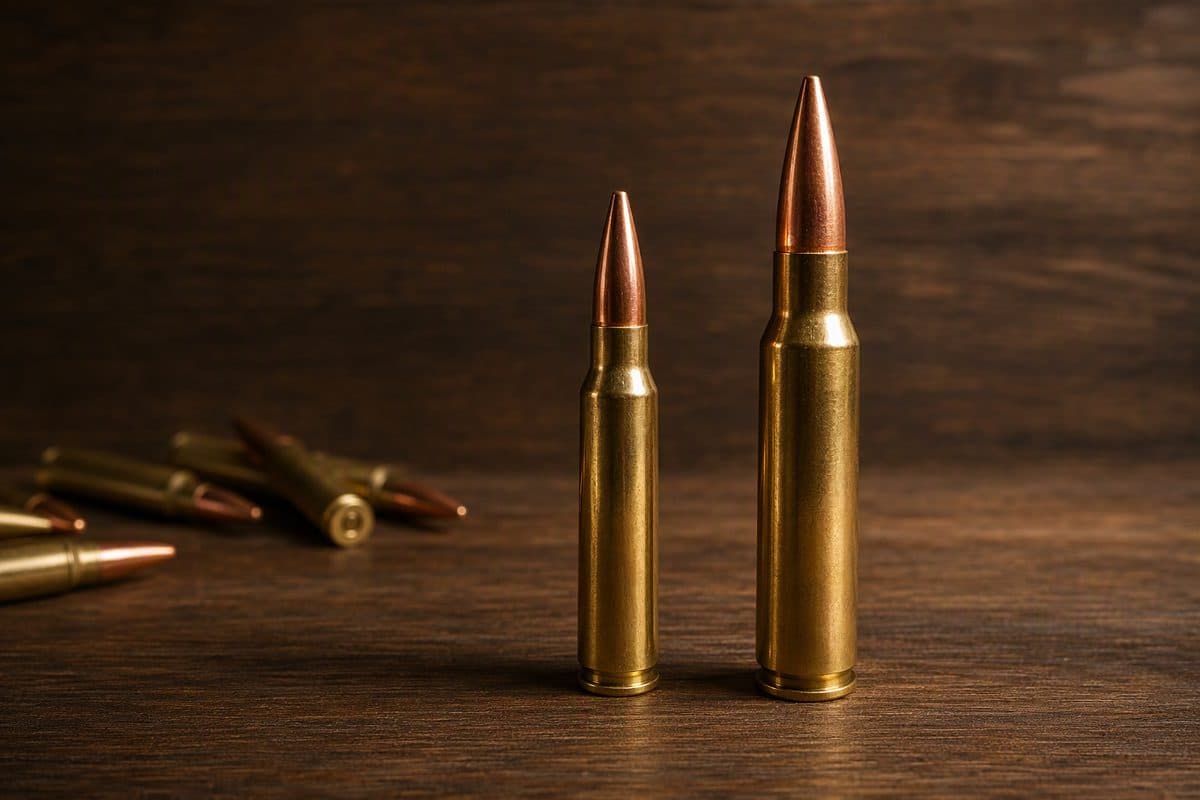
One is a light, fast round built for intermediate range. The other is a full-power battle cartridge that reaches much farther — at the cost of weight, recoil, and a noticeably emptier wallet.
The 5.56 NATO and .308 Winchester (7.62×51 NATO) have shared the same armories for decades, which is exactly why the comparison never settles. They solve different problems.
The short version
| 5.56 NATO | .308 Winchester | |
|---|---|---|
| Effective range | ~500 yards | ~800 yards |
| Recoil | Light | Moderate |
| Rifle weight | 6–7 lb | 8–9.5 lb |
| Ammo cost | Lower | Higher |
| Best for | Range, varmints, general use | Hunting, long range |
5.56: the everyday rifle cartridge
5.56 is light — you can carry more of it, and the rifles that fire it are handier in tight spaces. Recoil is mild enough that new shooters learn quickly, which is why it dominates American ranges. At typical sporting distances (100–300 yards) it is flat-shooting and more than accurate enough for steel, varmints, and general practice.
Its reputation for underperformance against larger game is earned — it's a small bullet, and ethical hunting starts with adequate energy. For range work, nothing has displaced it, and it remains the most affordable centerfire rifle ammunition to train with.
5.56 ammunition by brand and case price — worth comparing per-round costs before buying bulk.
.308: reach and authority
.308 carries far more energy much farther downrange. If your discipline involves 400+ yard shots, hunting deer-sized game, or a cartridge that doesn't run out of authority quickly, .308 is the answer. The costs are concrete: heavier rifles, more recoil, and meaningfully more expensive ammunition.
How to decide
Ask one question: what will you shoot most? Under 300 yards — 5.56. Long range and medium game — .308. Most shooters are better served by an inexpensive 5.56 rifle shot often than an expensive .308 shot twice a year. Rifle ammunition across calibers shows current pricing on both.
Keep reading
- Best caliber for home defenseAn honest comparison of 9mm, .45 ACP, and .380 ACP for home defense — penetration, capacity, recoil, and cost.
- First AR-15: what to knowA first-time AR-15 buyer's guide: caliber, configuration, accessories, and first-year budgeting.
- Browse the firearms catalogSpecs, overviews, and live ammo picks for every gun we cover.
Firearm and ammunition laws vary by state and locality. Verify compliance before purchase or transport. MaxFirearms is an independent publication and does not sell firearms or ammunition.